
 Voltar aos Projetos Realizados
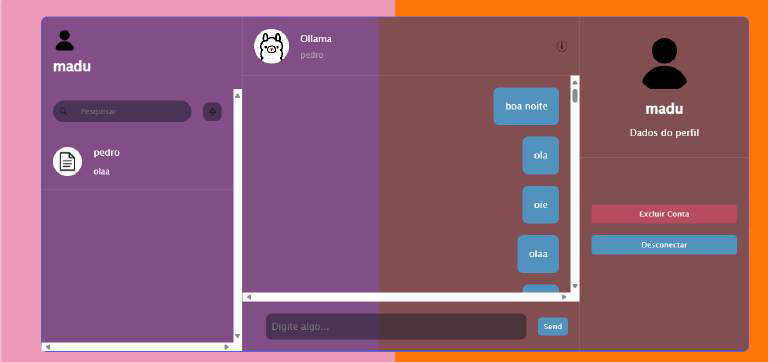
Pesquisa bibliográfica baseado em LLM e RAG
- Ano: 2025
- Titulo Original: Sistema offline para pesquisa bibliográfica baseado em LLM e RAG
- Modalidade: Trabalho de Iniciação Científica
- Organização: UFABC
- Autores: Maria Eduarda Hamparsomian, Hugo Puertas de Araujo
- Anexos:

RESUMO: A área da tecnologia sempre foi de extrema importância para a humanidade, e nos últimos anos seus avanços foram extremamente significativos, o que nos permite atualmente superar barreiras importantes na área de pesquisa, que são: pesquisar em diversas fontes ao mesmo tempo, leituras muito extensas que limitam o tempo do pesquisador e falta de auxílio na hora de se estudar e entender essas leituras. Vinda desta necessidade, criou-se um sistema que acessa arquivos em PDF em uma pasta local, permitindo que o usuário interaja com essas pastas através de uma interface do tipo chat. O sistema conta com um banco de dados vetorial, técnicas de RAG, Retrieval-Augmented Generation, e o Machine Learning, técnica usada para gerar embeddings dos textos e as respostas para as perguntas do usuário através de LLM rodando localmente. O Retrieval-Augmented Generation (RAG), nada mais é do que o processo de gerar textos através de um LLM, mas não a partir das entradas com as quais o mesmo foi originalmente treinado, mas sim a partir das informações extraídas de uma base de conhecimento confiável. Desta forma, evita-se que ocorram as “ilusões”, ou “alucinações”, que são erros de geração que o modelo comete e que causa desinformação, deixando o texto incoerente com a realidade ou com o contexto. Elas ocorrem principalmente devido à combinação de probabilidades de geração de texto, complexidade da linguagem natural e às limitações dos modelos em “entender” o contexto de maneira humana.
ABSTRACT: The field of technology has always been extremely important to humanity, and in recent years its advances have been extremely significant, allowing us to currently overcome important barriers in the research area, such as: researching in various sources at the same time, very extensive readings that limit the researcher's time, and lack of assistance when studying and understanding these readings. Out of this need, a system was created that accesses PDF files in a local folder, allowing the user to interact with these folders through a chat-type interface. The system has a vector database, RAG (Retrieval-Augmented Generation) techniques, and Machine Learning, a technique used to generate embeddings of the texts and answers to the user's questions through LLM running locally. Retrieval-Augmented Generation (RAG) is nothing more than the process of generating texts through an LLM, but not from the inputs with which it was originally trained, but rather from information extracted from a reliable knowledge base. In this way, it avoids "illusions" or "hallucinations," which are generation errors that the model makes and that cause misinformation, leaving the text inconsistent with reality or the context. They occur mainly due to the combination of text generation probabilities, the complexity of natural language, and the limitations of models in "understanding" the context in a human way.